

The defining paradox of modern healthcare lies in a single, ultimate question: If Traditional Chinese Medicine (TCM) is so effective, why hasn't Western medicine widely adopted it?
Contrary to what skeptics claim, the barrier preventing integration is not a lack of scientific evidence. The true barrier is economics.
A Tale of Two System Diagnostics
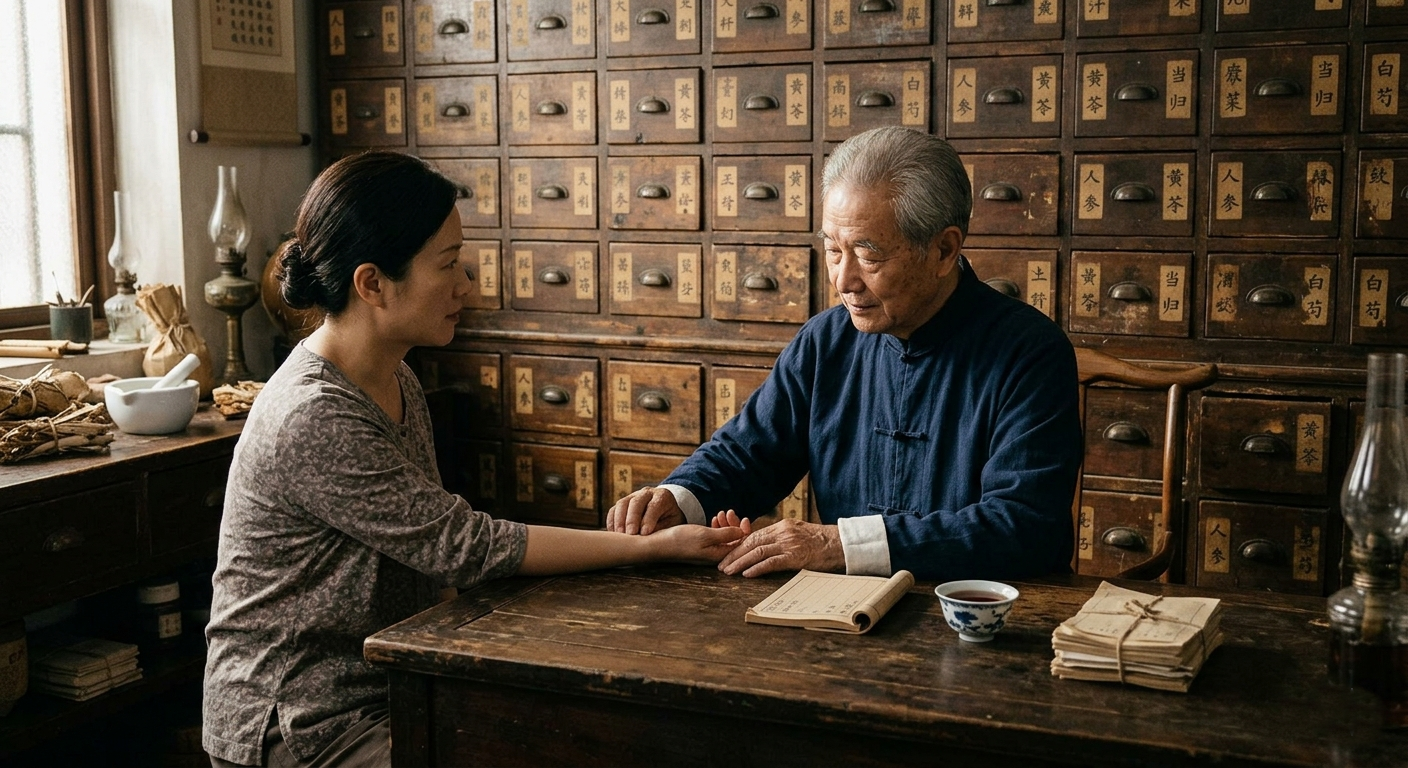
- The TCM Protocol: A standard diagnosis takes fifteen minutes of meticulous examination using the four pillars of diagnostic exploration—Wang, Wen, Wen, Qie (望闻问切), encompassing pulse-taking, tongue inspection, and deep symptomatic questioning. It yields a natural herb formula that costs mere pennies and fundamentally cannot be patented.
The Western Protocol: A standard chronic disease consultation often takes five minutes, produces an ICD diagnostic code, and yields a recurring pharmaceutical prescription for a synthetic drug that costs hundreds of dollars per month—safeguarded by stringent patent protections for twenty years.
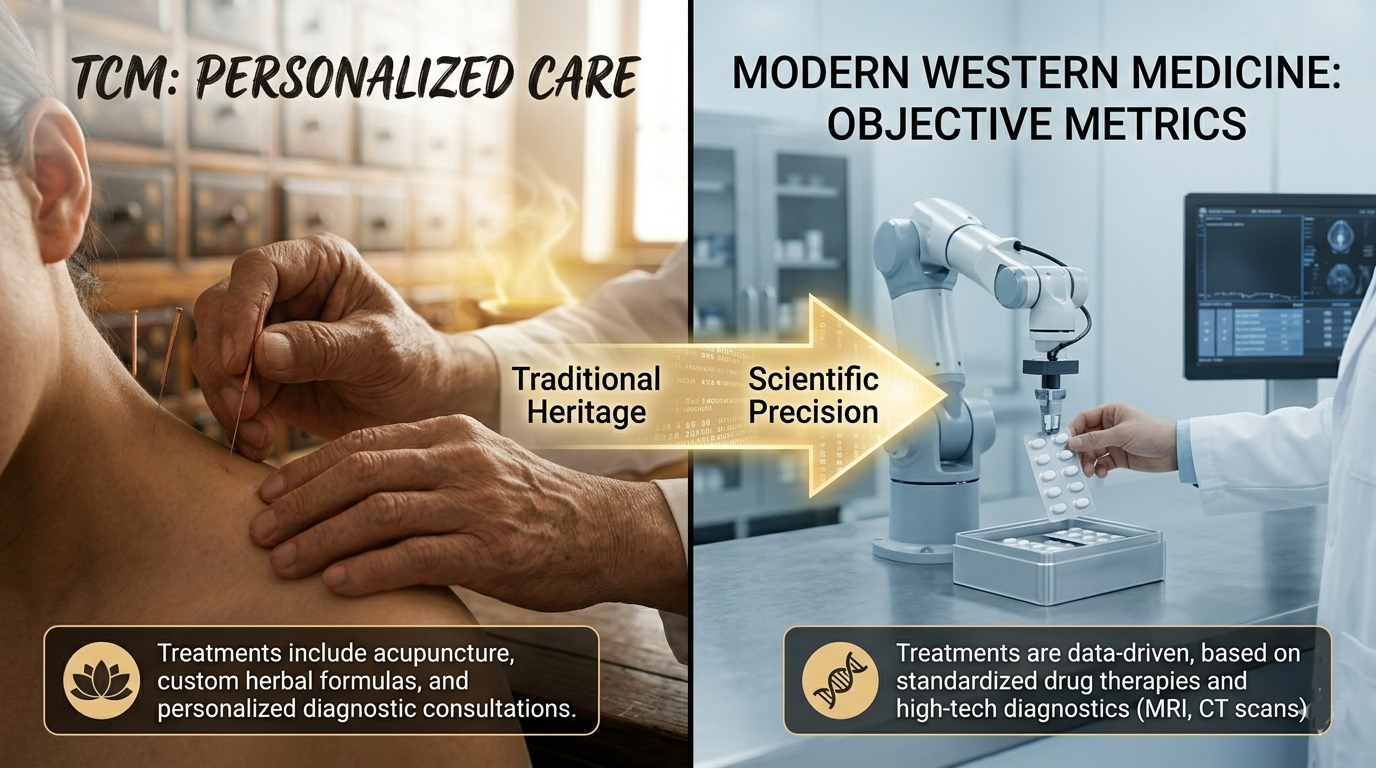
Low cost Traditional Chinese Medicine treatments VS. Expensive Western Medicine Diagnostics

We are left with a stark reality: One system is designed to heal; the other system is engineered to profit. While naysayers aggressively defend the purity of "evidence-based medicine," evidence-based institutions have systematically chosen the expensive, less effective pathway for chronic diseases for over fifty years. That trajectory does not point to science; it points to institutional corruption dressed in a white coat.
"TCM does not fight back because it does not need to. The plants keep growing. The TCM doctors keep brewing. And the patients who have been failed by Western medicine keep arriving at the acupuncturist's door, weeping with gratitude, asking: 'Why did no one tell me about this sooner?' That question is the only evidence TCM has ever needed. It remains unanswerable by anyone who still believes in the supremacy of the scalpel and the pill." — Cae Hiew

Rewriting History: The Advanced Roots of Ancient Surgery
While modern critics often relegate traditional Eastern therapies entirely to holistic wellness, recent breakthrough archaeological and chemical findings highlight the highly advanced historical state of ancient Chinese surgery.
Groundbreaking analytical research published in the journal Antiquity and reported by ScienceAlert revealed that 600-year-old Ming Dynasty surgical tools contained direct, microscopic chemical evidence of plant-based local anesthetics. By analyzing iron tools recovered from the tomb of a 15th-century physician, scientists detected traces of aconitine—a potent nerve-paralyzing alkaloid derived from monkshood plants—proving ancient practitioners possessed highly sophisticated topical pain-management controls long before modern equivalents surfaced.
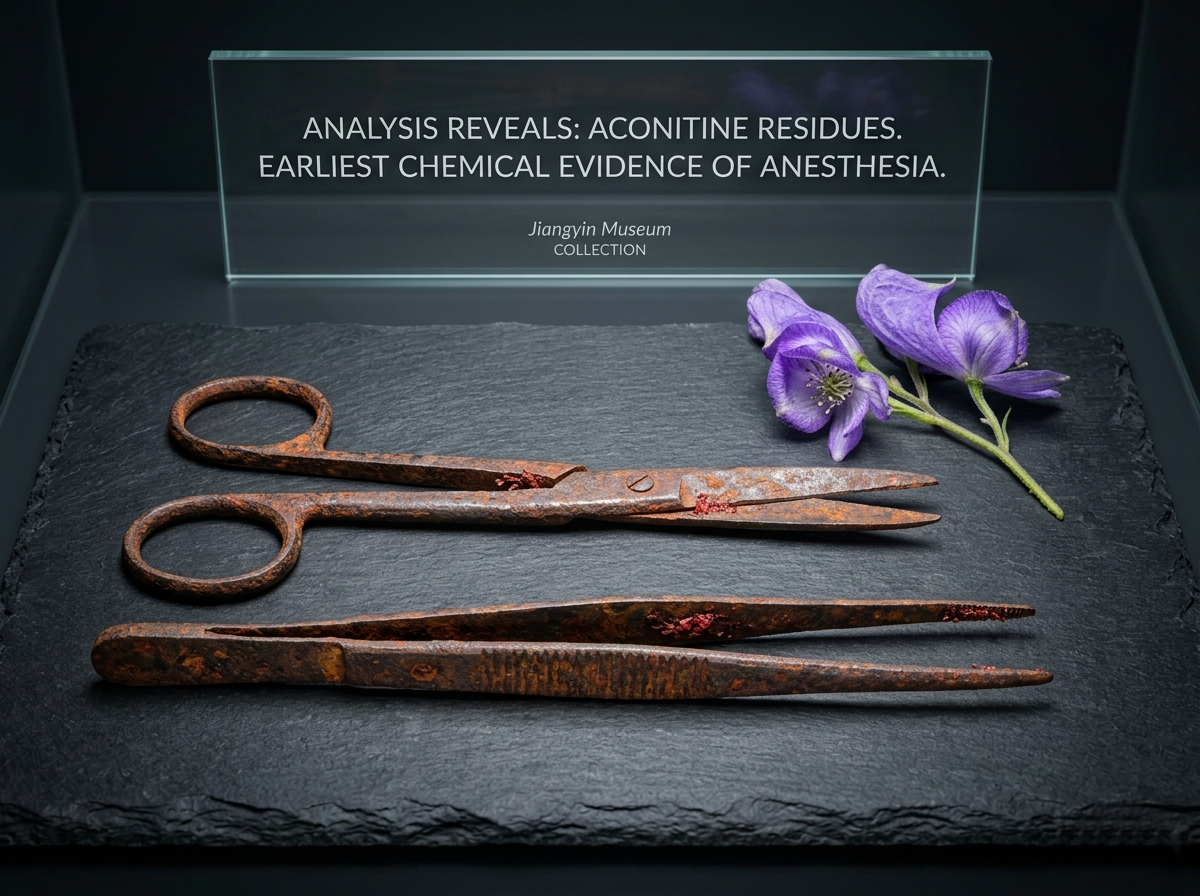
This historical framework shows that ancient Chinese practitioners actively utilized advanced physical and pharmacological surgical interventions for centuries:
- The Shang Dynasty & Stone Scalpels (c. 3,400 Years Ago): Physical evidence of pristine stone scalpels dates back millennia. The earliest known stone surgical tools were unearthed at the historic Taixi site in Gaocheng, Hebei Province, proving early surgical focus.
- The Ming Dynasty & Refined Metal Toolkits (c. 14th–17th Century): By the Ming era, surgical toolkits had become incredibly elaborate. Specialized medical kits featured willow-leaf-shaped iron scalpels, ultra-fine tweezers, and suture needles that directly mirror the structural shapes of modern surgical instruments used today.
Ultimately, the traditional line of medicine did not lack scientific ingenuity or physical tools. It merely maintained a worldview that protected both the patient's body and their pocketbook—a philosophy that modern medical structures continue to reject.
- Log in to post comments